Kalakari.in

oil vs watercolor vs acrylic portrait

Oil vs Watercolor vs Acrylic — Which Portrait Style Is Right for You?

Oil vs Watercolor vs Acrylic — Which Portrait Style Is Right for You?

(A deep, researched guide for collectors, givers, and portrait lovers)

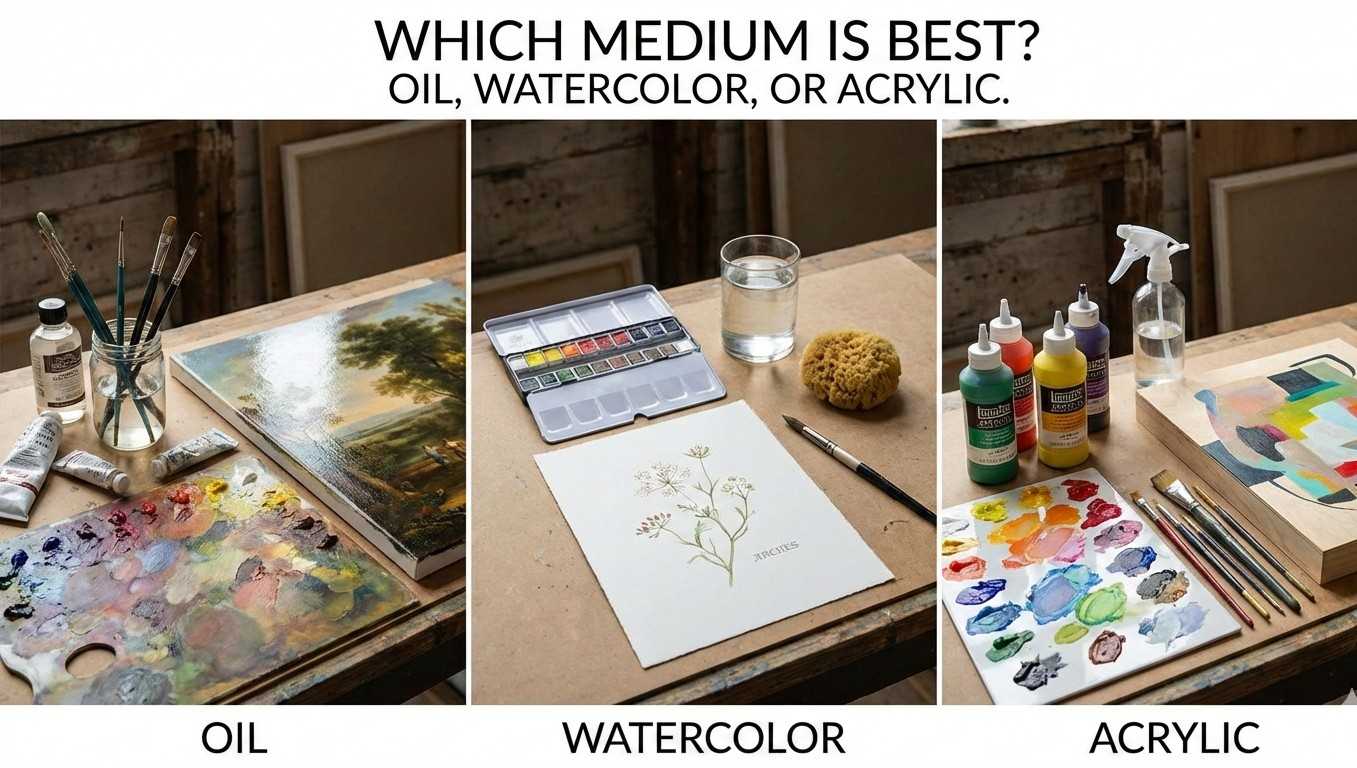
Short summary: Oil, watercolor and acrylic are the three most popular media for portrait painting. Yet they behave very differently. Oils give depth and glow; watercolors offer translucency and lyricism; acrylics provide speed, versatility and bold color. Below, you’ll find an in-depth comparison of each medium’s materials, technique, visual character, cost, longevity, framing & conservation requirements, commissioning timelines, and which photo types suit each style best.

oil vs watercolor vs acrylic portrait

Table of contents

  • Why choice of medium matters for a portrait
  • Quick summary: visual character of each medium
  • Materials & supports (what artists actually use)
  • Working techniques & how they affect realism
  • Color, glazing, and the science of light in painting
  • Drying times, layering strategies & revisions
  • Longevity & conservation — archival differences explained
  • Cost, time, and what you should expect to pay
  • Choosing a medium by photo type and emotional goal
  • Framing, varnish & shipping: practical rules for buyers
  • Environmental, health & studio considerations
  • Commissioning checklist: questions to ask your artist
  • Case studies (examples of decisions and outcomes)
  • FAQ (schema-ready)

1. Why the choice of medium matters for a portrait

When commissioning a portrait, many buyers focus on subject, size and price — but not medium. However, medium affects how skin reads, how light behaves, how the portrait ages, and how it should be displayed. In short, medium = long-term experience. Therefore, it’s worth understanding differences before you pay a deposit.

2. Quick visual summary: Oil, Watercolor, Acrylic

  • Oil: Rich, luminous, subtle transitions. Excellent for realistic, classical, museum-quality portraits. Superb for skin tones and depth. Slower process — allows reworking and glazing. Best for heirloom commissions.

  • Watercolor: Transparent, delicate, airy. Excellent for lyrical, intimate portraits and loose impressions. Works beautifully for children, soft family groupings, or stylized portraits. Requires a confident hand; mistakes are less easily hidden.

  • Acrylic: Fast, versatile, vibrant. Can mimic oil (with retarders/glazes) or go flat and graphic. Good for modern, colorful, bold portraiture. Dries quickly which shortens commission time—great when you want a fast turnaround.

3. Materials & supports — what artists really use

Oil

  • Supports: Primed linen or cotton canvas, wooden panels for very fine detail.

  • Primers (ground): Lead-white traditional grounds historically; modern acrylic gesso is common now.

  • Pigments & binders: Pigments suspended in linseed or walnut oil. Choice of oil affects yellowing and drying time.

  • Mediums: Linseed oil (increases gloss & flow), stand oil (levels brushwork), damar varnish (final gloss).

  • Brushes: Hog bristle for impasto, sable/kolinsky for fine detail (esp. portrait edges & eyelashes).

Watercolor

    • Supports: 100% cotton rag paper (300–640gsm), cold-pressed for texture or hot-pressed for smooth detail.

    • Pigments: Pigments bound in gum arabic. Lightfastness varies—choose artist-grade pigments over student grade.

    • Tools: Sable or synthetic rounds, flat wash brushes, masking fluid for highlights.

    • Additives: Gum arabic for sheen & control; ox gall as wetting agent.

Acrylic

      • Supports: Canvas, panels, heavyweight acrylic paper, board.

      • Pigments & binders: Pigments in acrylic polymer emulsion.

      • Mediums: Retarder (slows drying), glazing medium, heavy body gels (for texture), matte medium.

      • Brushes: Synthetics preferred; hold up to acrylic’s fast drying and chemical properties.

4. Working techniques & how they affect realism

Oils — layering and glazing

        • Fat over lean: oils require foundational layers less oily than upper layers to avoid cracking.

        • Glazing: thin translucent layers (oil + medium) create depth and subtle shifts in color — crucial for skin’s translucency.

        • Blending time: long open time allows feathered transitions around eyes, lips, and cheeks.

Watercolor — subtractive and additive light

          • Reserve whites: white paper is the highlight; artists preserve it rather than painting white.

          • Wet-in-wet vs wet-on-dry: wet-in-wet creates soft edges and atmospheric transitions; wet-on-dry allows crisp edges.

          • Lifting & granulation: skilled artists lift pigment to create subtle highlights—this is why watercolor portraits feel airy.

Acrylic — immediacy and experimentation

            • Layering: fast-drying permits many opaque and semi-opaque layers in a short time.

            • Texture: gels and pastes enable sculptural surfaces; good for expressive portraits.

            • Mimicking oil: with retarders and glazing, acrylic can imitate oil’s depth, though the chemistry differs.

5. Color, glazing, and the science of light in portraits

Skin values depend on subsurface scattering: light penetrates skin, scatters, and returns — giving skin its soft glow. Artists mimic this with translucent layers:

  • Oil glazing is the closest analogue to subsurface scattering because thin, transparent oil layers allow light to penetrate and reflect back.

  • Watercolor uses the paper whiteness plus transparent washes to achieve a luminous look.

  • Acrylic can produce similar optical results, but the faster drying and film formation mean the visual texture differs subtly.

Practical tip: when requesting lifelike skin tones, ask whether the artist uses glazing; if yes, oil is often the best choice for ultra-realism.

6. Drying times, layering strategies & revisions

Medium Typical behavior Revision window
Oil Slow; days to weeks to dry to touch (depending on medium) Long — many months for full curing; artist can rework across sessions
Watercolor Quick; hours depending on humidity Limited — requires careful planning; lifting possible early
Acrylic
Fast; minutes to hours Moderate — can paint over quickly, but some blending is harder

Therefore:

  • Choose oil for major reworkability and layered realism.

  • Choose watercolor if you want a delicate, impressionistic portrait and accept less reworking.

  • Choose acrylic if you need speed and flexibility

7. Longevity & conservation — archival differences explained

Conservation is critical for commissions meant to be heirlooms.

Buyer guidance: For long-term heirloom purposes, oils on archival canvas (with professional varnish and proper framing) are often the safest bet. However, watercolor on 100% cotton rag, framed under UV-protective glazing, also performs well.

8. Cost, time & what you should expect to pay

Pricing depends on size, artist reputation, detail level, and medium.

  • Oil: higher cost due to time spent, quality materials, and framing expectations. Expect premium pricing for detailed realism.

  • Watercolor: often lower cost for smaller works, but complex group compositions still demand significant time.

  • Acrylic: generally mid-range; fast turnover can reduce labor cost, but complex textural work increases price.

Timeframes:

  • Small watercolor/pencil portrait: 3–10 days

  • Mid-sized acrylic portrait: 7–21 days

  • Realistic oil portrait (life-size or multi-figure): 2–8 weeks (sometimes longer for multilayer glazing and varnishing)

9. Choosing a medium by photo type & emotional goal

Photo considerations

  • Old, damaged or low-res photos: Oil artists can reconstruct and idealize more effectively because of the flexibility of layers and reworking. Charcoal or pencil may also suit nostalgic vibes.

  • High-contrast portraits: Charcoal and black-and-white approaches can be stunning.

  • Bright, playful children's photos: Color pencil or watercolor captures softness and innocence.

  • Bold, modern portraits: Acrylic with a vivid palette can give a contemporary look.

Emotional goals

  • Heirloom / museum-like gravitasOil

  • Delicate nostalgia / intimacyWatercolor / Pencil

  • Modern, graphic, vibrant statementAcrylic

  • Memorial (solemn, monochrome)Charcoal / Pencil

10. Framing, varnish & shipping — practical rules for buyers

Oils

  • Varnish: Apply a removable final varnish after full curing (months) to protect and unify gloss. Use conservation-grade varnish.

  • Framing: Use archival liner and a sturdy frame. Spacer if framed without glass.

  • Shipping: Crate or rigid support; avoid extreme humidity and temperature swings.

Watercolors

      • Photo: High-resolution studio photo, warm side light.

      • Artist choice: Oil on linen, glazing for skin translucency.

      • Outcome: Museum-quality portrait, varnished, framed; family heirloom.

Acrylics

      • Varnish: Optional; provides UV and dust protection. Matte or gloss depending on finish.

      • Framing: Similar to oil; acrylics can be framed with or without glazing.

      • Shipping: Rigid support; protect textured surfaces.

11. Environmental, health & studio considerations

  • Oil solvents: Historically used solvents (turpentine) are hazardous; many artists now use low-odor solvents or solvent-free oils. If you have sensitivities, ask the artist.

  • Acrylic: water-based and less toxic, but fumes can occur with mediums.

  • Watercolor: least toxic of the three; minimal solvents used.

  • Sustainability: inquire about pigment sources—some artists avoid cadmium or other heavy-metal pigments for environmental or safety reasons.

Before committing, ask:

  1. Which medium do you recommend for my photo and why?

  2. Can you show examples in this medium with similar lighting/skin tones?

  3. What is the expected timeline?

  4. How many revisions are included?

  5. What size, support, and framing options do you offer?

  6. Do you use archival pigments and grounds?

  7. How will the portrait be packaged and shipped?

  8. What is the deposit and refund policy?

13. Case studies

Photo-to-painting

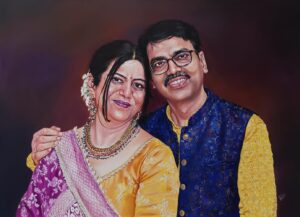
Case A — Wedding Anniversary

Photo: High-resolution studio photo, warm side light. Artist choice: Oil on linen, glazing for skin translucency. Outcome: Museum-quality portrait, varnished, framed; family heirloom.
oil vs watercolor vs acrylic portrait

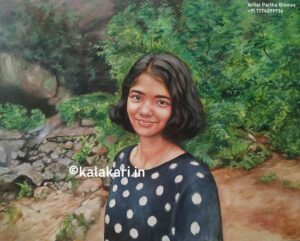
Case B — Child’s Playful Portrait

Photo: Outdoor playground shot, bright colors. Artist choice: Oil color or color pencil for softness and vibrancy. Outcome: Framed under museum glass
custom-portrait-painting

Case C — Contemporary Bold Statement

Photo: Graphic headshot, strong color preferences. Artist choice: Acrylic with heavy textures and palette knife. Outcome: Bold living-room focal point.

14. FAQ

Q1: Which medium lasts the longest — oil, watercolor, or acrylic?

Each medium can last centuries if made and conserved correctly. Traditionally, oil on archival canvas has the strongest track record; however, watercolor on 100% cotton rag framed under UV-protective glass also has excellent longevity. Modern acrylics with archival pigments are stable too.

Q2: Can acrylic look like oil?

Yes, modern acrylics can emulate oil using glazing mediums and retarders, but the final chemical properties differ. True oil glazing has a unique luminous depth due to the oil binder.

Q3: I have an old, faded photo — which medium is best?

Oils or charcoal/pencil are often best for restoration-style portraiture because artists can reconstruct detail, idealize lighting, and layer corrections. Ask your artist for examples.

Q4: How long does a portrait take?

Small watercolor/pencil pieces: days to two weeks; acrylics: 1–3 weeks; detailed oils: several weeks to months (including drying and varnishing).

Q5: How should I display a watercolor portrait?

Under UV-protective glazing (museum glass), with acid-free mats and out of direct sunlight.
error: Content is protected !!
1